Leukerbad Clinic
Therapies
Medical therapies and thermal treatments. Which indication calls for which treatment.
Your therapy programme
To reach your rehabilitation goals, your doctor prescribes a set of therapies. Their number, type and frequency depend on your diagnosis and your goals. The day of your arrival is devoted to your administrative, medical and nursing admission; your programme starts gradually the following day, and every evening you receive in your room the schedule for the next day. On weekdays you generally receive one individual therapy per day, combined with medical training therapy and/or group therapies, as well as access to the pools, unless contraindicated. The therapies are discussed with the doctors and therapists from your arrival and reassessed during your stay.
The therapy areas
In line with the criteria of the Swiss rehabilitation system ST Reha, a stay combines several therapy areas:
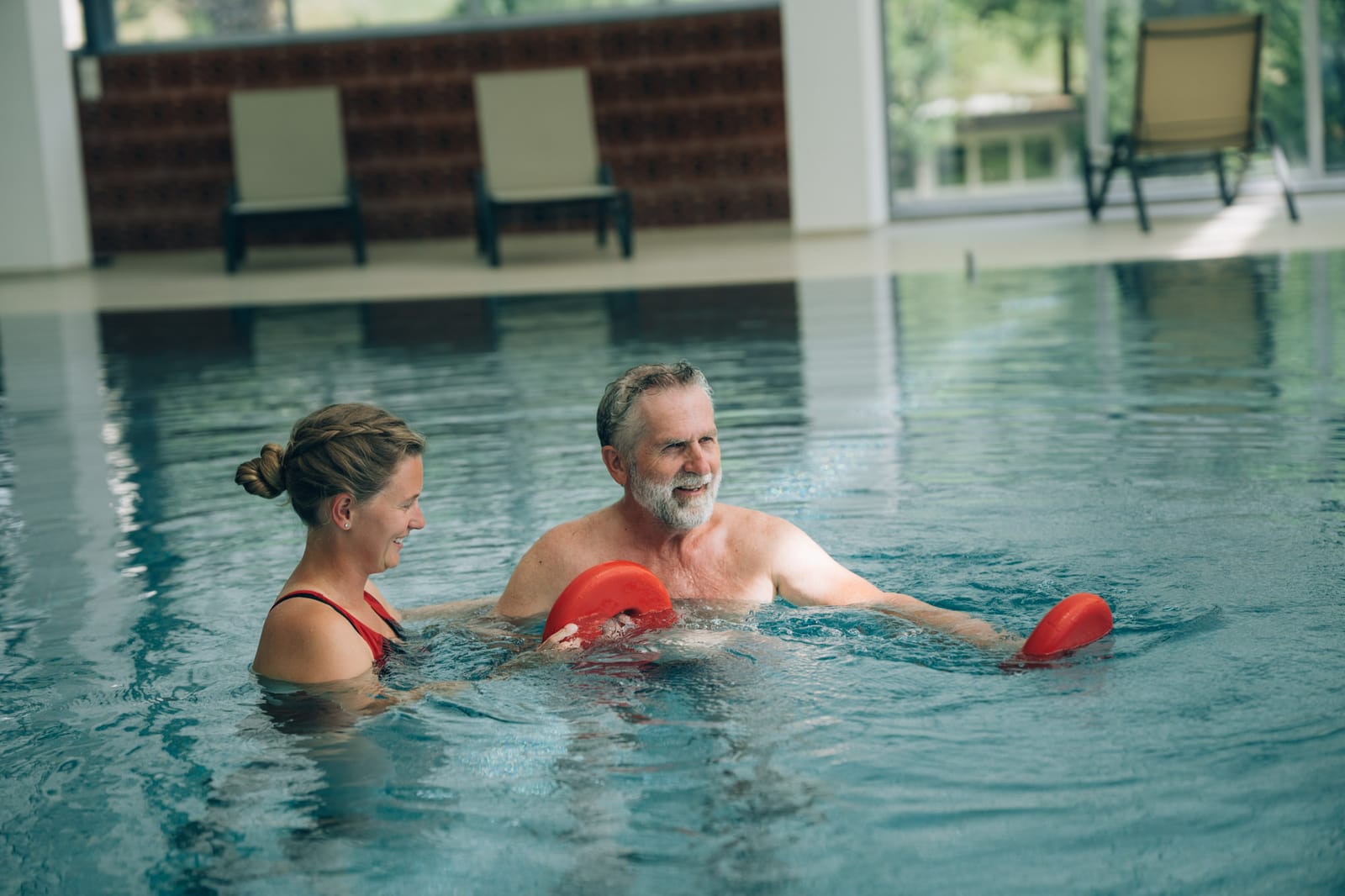
- physiotherapy, individually or in a group, on land and in the thermal water (mobilisation therapy in water);
- occupational therapy, to regain your independence in everyday life, at work and in leisure activities;
- medical training therapy (muscle strengthening) in our training room, after personal instruction by a therapist;
- passive physical therapies: massage, lymphatic drainage, heat applications, electrotherapy;
- psychological support (talking therapy);
- dietary advice.
In rehabilitation in internal medicine and oncology, physiotherapy, occupational therapy and medical training therapy are part of every programme. In musculoskeletal rehabilitation, weekly active physiotherapy is combined with at least two other areas.
Our teams
These therapies are provided by our physiotherapists, occupational therapists, sports therapists, massage therapists, dietitians, psychologists and naturopaths, who work as an interdisciplinary team with the doctors and the nursing staff. The families of therapies and their methods are presented below.
Your goals
Treatment goals
Leukerbad Clinic’s programmes are fully personalised according to each person’s state of health. Together with the doctors and therapists, you define the goals you wish to achieve. Generally speaking, the treatments carried out at the Clinic pursue the following general objectives:
- relieve pain or improve its management
- improve mobility and functional stability
- stimulate and strengthen the muscles
- regenerate the body
- establish good lifestyle habits
- resume daily life with energy and confidence in your abilities
Active therapies
Passive therapies
Group therapies
Thermal therapies
Dietetics and Chrono-nutrition®
Traditional Chinese medicine
Ancient knowledge in the service of your health
Naturopathy
Clinical psychology
Traditional Chinese medicine
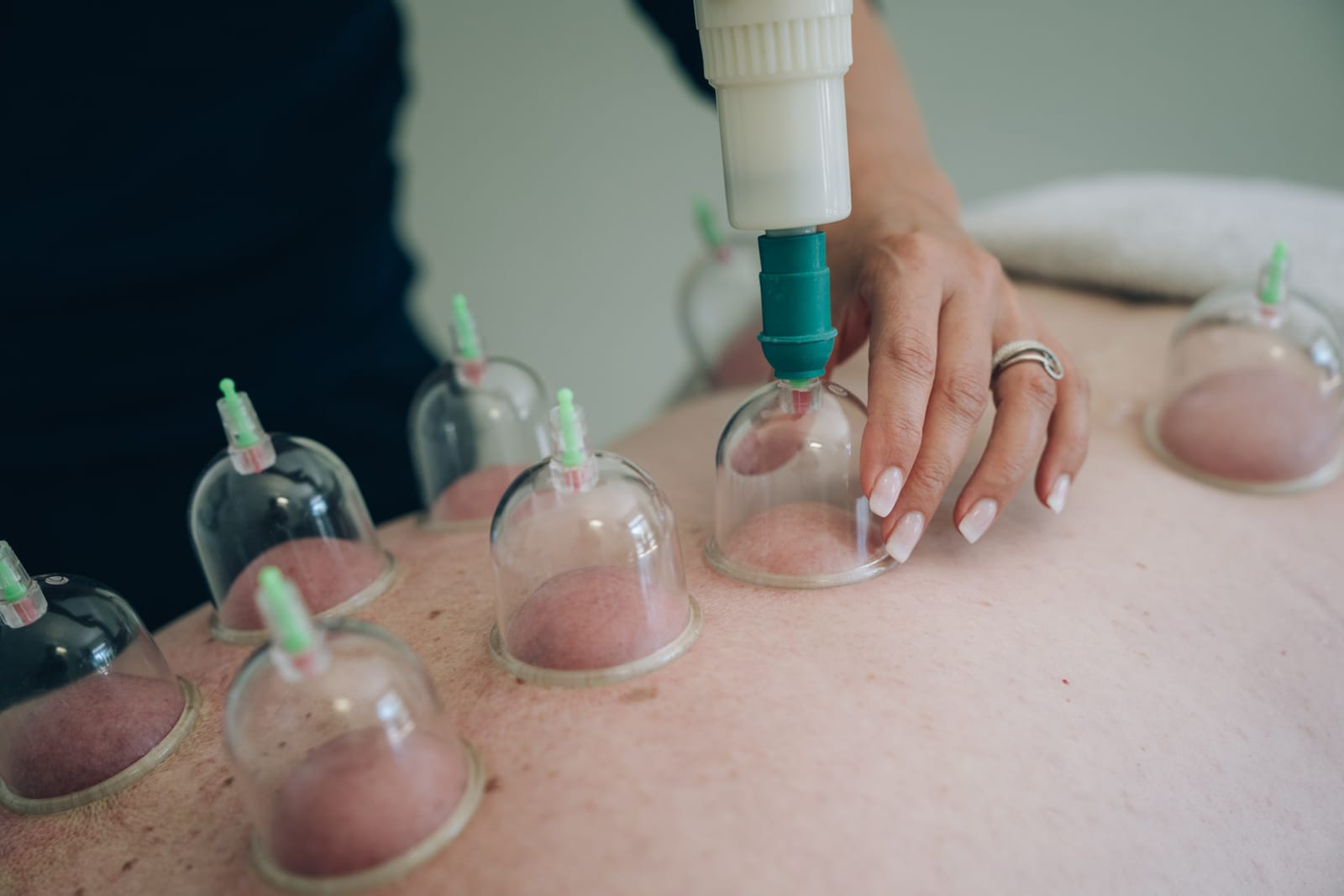
In addition to allopathic medicine, the Leukerbad Clinic also practises aspects of Traditional Chinese Medicine (TCM) such as Tuina acupuncture. This is a massage performed on the clothed patient, either seated or lying down, working on the meridians and specific acupuncture points to release blockages. It is beneficial both for treating physical pain and for promoting general wellbeing.
In this section
Balneotherapy
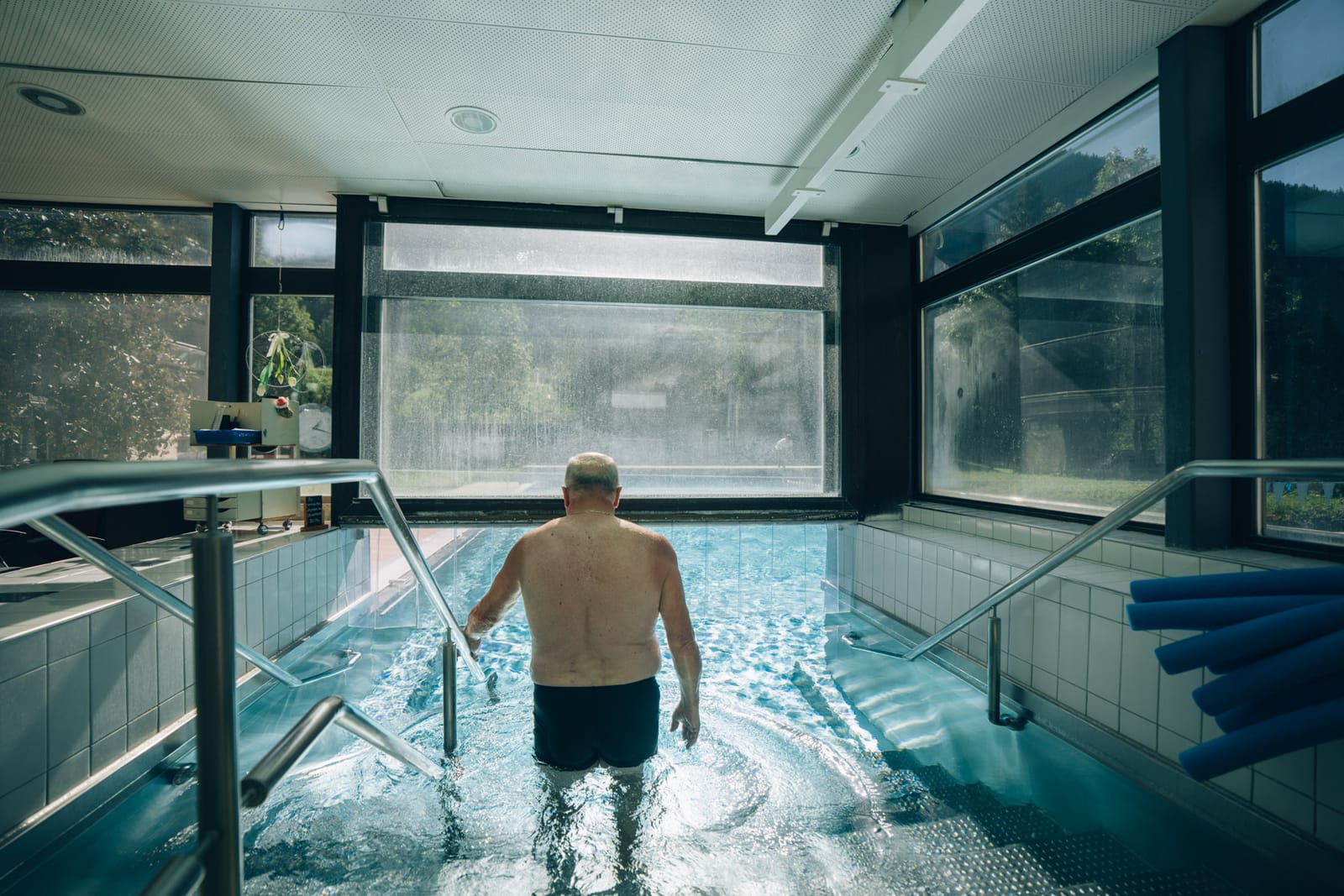
Treatments in the thermal water, the reason people have come to Leukerbad for centuries.
OpenActive therapies
Movement, training and activities in which you do the work.
Physiotherapy
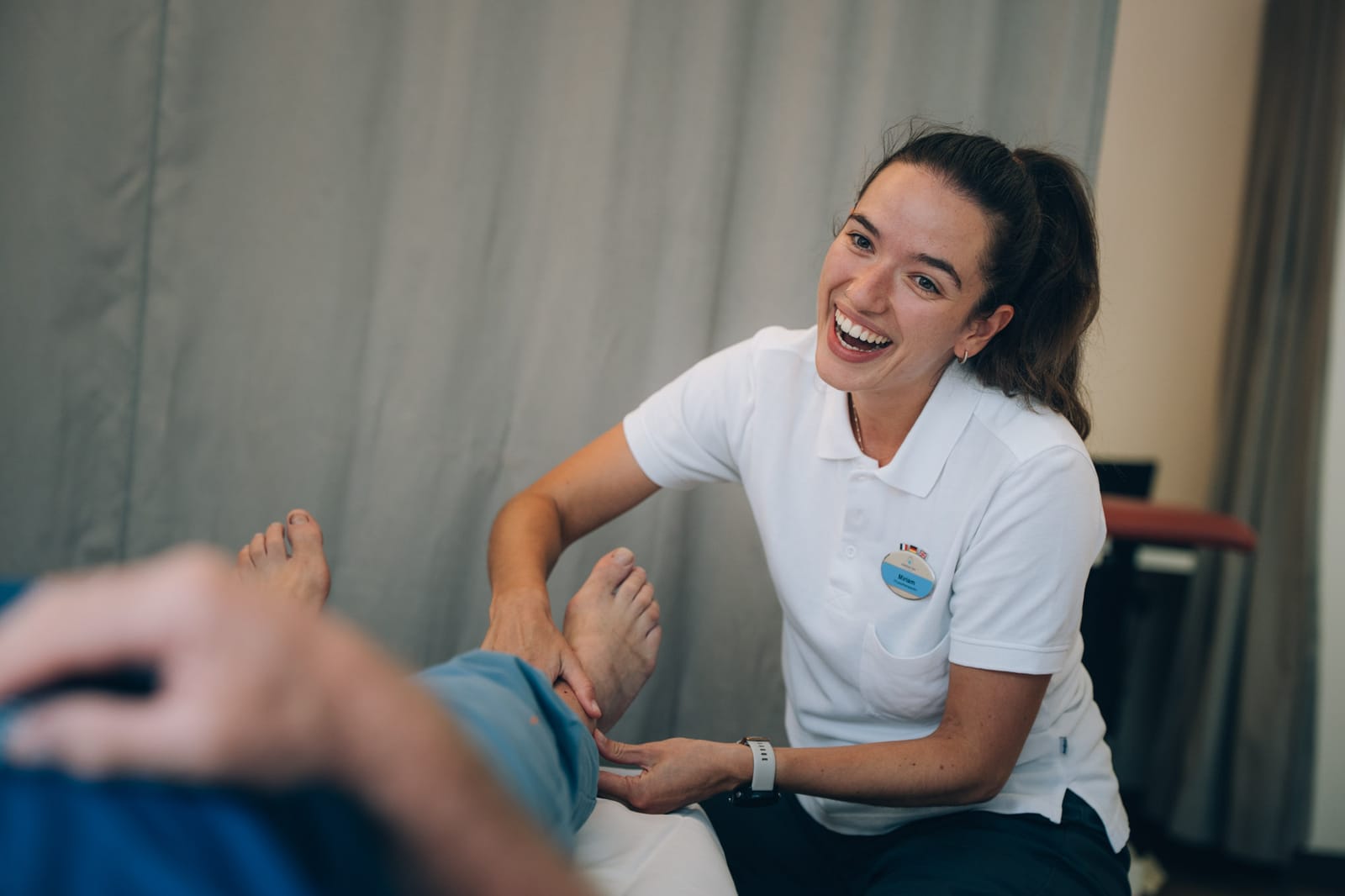
Physiotherapy treats functional physical disorders and pain. The aim is to improve the patient’s quality of life and autonomy.
Physiotherapists
- relieve pain,
- restore functional abilities (personal care, walking, climbing stairs, running, etc.) as far as possible,
- mobilise the joints that need it,
- strengthen weakened muscles,
- stretch shortened muscles,
- improve mobility and balance,
- teach active or passive movements as well as relaxation exercises
Kinesiology taping
By exerting directional traction on the skin, elastic adhesive strips support or restrict the mobility of the underlying tissue, stimulate lymphatic circulation and also act on the pain receptors located in that same tissue.
Fitron
The Fitron is a stationary indoor bike that can be used sitting or lying down. Unlike “standard” exercise bikes, the Fitron’s pedals can be adjusted separately. This allows pedalling without placing strong flexion on the knee joint. It is therefore well suited to patients with a knee prosthesis, as well as to training elite athletes with meniscus injuries.
- Its use helps improve knee joint mobility and increase endurance.
Medical training therapy (MTT)
A specific exercise programme is developed by a therapist based on your diagnosis. Some movements are performed using equipment, others without. They help promote the rehabilitation process and improve bodily functions. By carrying out the training independently, after being trained by a therapist, the patient actively and responsibly contributes, with significant results, to the success of their therapy.
Stabilometer
The stabilometer is used both to test and to strengthen balance. You stand on a platform connected to a measuring device. This makes it possible to track the state, progress, deterioration or stagnation of your sense of balance.
Isokinetic testing and training (CON-TREX®)
Isokinetic means that a movement is performed at a constant speed. Keeping the speed constant throughout a movement avoids inaccurate results in an effort test. In our clinic we use it for examinations and training of patients with, for example, a knee prosthesis, knee osteoarthritis, loss of strength in the thigh, or chronic non-specific back pain. Thanks to the seated position and the speed, compression of the knee joint is avoided and an optimal result is achieved with gentle training. The device can also be used for the trunk, serving as a measuring instrument for the strength of the back’s flexor and extensor muscles.
Treadmill
Walking on a treadmill adapted to your current performance level can be done with or without support. It improves walking ability as well as overall physical fitness.
Occupational therapy
Occupational therapy aims to help you regain independence in your everyday, work and leisure activities, while protecting your joints and reducing pain.
Through changes in habits, the adoption of new postures, the possible use of aids, and individually tailored suggestions for adapting your home or work environment, your ability to act is supported according to your goals and personal needs.
You decide which activities are the priority ones you wish to carry out without pain and without endangering your physical integrity (for example after hip replacement surgery).
Passive therapies
Treatments during which you rest: for example heat, massage, lymphatic drainage, electrotherapy.
Medical massage
Massage acts on the skin, muscles, ligaments, tendons and connective tissue through stroking, kneading, friction, stretching, traction and pressure stimulation. It is used to restore muscle and tendon elasticity, soften tissue, reduce contractures, increase joint mobility and range of motion, and improve blood and lymphatic circulation in the muscle tissue.
Massage is mainly applied to the area presenting an issue, but its effect extends to the whole body. Indeed, therapeutic touch also has benefits for psychological relaxation, which in turn brings its own benefits to the body.
Dry needling
This method aims to reduce muscle pain. Very fine, disposable needles are used, without medication, to precisely target the trigger points responsible for the pain. Trigger points are areas within the muscles that are hypersensitive to palpation. When active, they can cause pain during movement or even at rest. A characteristic feature of trigger points is pain that radiates to other parts of the body. Normally the needle prick on the skin is barely felt, tension is reduced immediately and blood flow is improved.
Sollux lamp heat application
The Sollux lamp emits heat at an adjustable temperature. Blood circulation and the metabolism of the tissue warmed in this way are stimulated, muscle tension is reduced and pain is eased. This method is used to prepare for or support a therapy, as the heat helps reduce muscle tone.
Heat pack
Heat can also be applied using a heat pack on the painful part of the body in preparation for medical massage.
Manual or machine lymphatic drainage
Lymphatic drainage is a gentle technique performed with slow, regular circular pressure. Its purpose is to promote the flow of lymph, the fluid that carries white blood cells, excess proteins and cellular waste. This allows oedema that may occur after trauma or surgery to be reabsorbed more quickly.
Thanks to its light touch and regular movements, this massage is very relaxing. At Leukerbad Clinic it is performed manually or using the LYMPHA-MAT® device.
Electrotherapy (TENS®)
Electrotherapy, or TENS (Transcutaneous Electrical Nerve Stimulation), involves applying mild electrical currents to the skin using electrodes to block or alter the pain signal sent to the brain, thereby relieving post-traumatic, joint or muscular pain as well as back pain.
Deep oscillation therapy
This gentle approach, based on cellular regeneration, uses an electrostatic field to create oscillations that spread deep into all tissues: the epidermis, conductive tissue, subcutaneous fat, muscles, blood and lymphatic vessels. It has an anti-inflammatory action, reduces oedema and speeds up healing.
Group therapies
Working in small groups, with people going through the same thing.
Hip endoprosthesis group
The exercises are done standing, sitting or walking. Slow exercises help strengthen the stabilising muscles around the hip joint. Stretching movements help release muscle tension around the hip. Walking aids may be used, but not a wheelchair!
Knee endoprosthesis group
The exercises are done standing or sitting. They are specially designed for cases of endoprosthesis and other knee conditions. They help restore muscle strength and improve the mobility of the endoprosthesis and of the healthy leg’s joint. Walking aids may be used, but not a wheelchair!
Fall prevention
The exercises practised in these groups aim to stabilise body perception, develop movement coordination, and strengthen muscles and balance in order to gain confidence in everyday life. They combine balance work with strength work. Practised in a group, they are playful and sociable. They take place walking and standing, with or without small equipment.
Qi Gong
Qi Gong is a comprehensive energy-based exercise practice consisting of a series of continuous, circular movements performed slowly and precisely in a set order.
Besides reducing the risk of falls, it is thought to increase walking speed, improve balance and provide greater confidence when moving around.
Yoga
Yoga is an ancient Indian discipline combining postures, breathing exercises and meditation aimed at promoting physical and mental well-being.
Dynamic or static body exercises can be performed sitting, standing and/or lying down. The type of yoga practised at Leukerbad Clinic is therefore suitable for beginners and advanced yogis alike.
Yoga brings many physical benefits, such as muscle stretching, gentle muscle strengthening and improved balance. With regular practice, postural habits developed over a lifetime can be corrected, which eases chronic back problems. It also helps reduce stress and improve sleep quality, concentration and memory.
Stretching
Long periods spent sitting or lying down, as well as a lack of movement, can make the body stiff and immobile over time. Gentle, passive stretching, without jerky movements, loosens and stretches the muscles and joints. The movements are accompanied by breathing work. Regular practice also improves body awareness.
Regardless of age, strength, weight or mobility, everyone can stretch the different parts of their body and feel the benefits!
Pilates
The Pilates method, sometimes simply called Pilates, is a system of physical activity developed in the early twentieth century by Joseph Pilates, who had a passion for sport and the human body. It aims to develop the deep muscles, improve posture, balance the muscles and increase joint flexibility, in order to maintain, improve or restore physical function. It is a particularly gentle method, well suited to injury prevention and rehabilitation.
Aerobics
Aerobics is a cardiovascular and coordination workout that uses music to link together different step sequences.
A step — an anti-slip platform with adjustable height — is usually used to practise stepping up and down. Here, this workout is performed without jumps; it is gentle on the joints and only moderately intense.
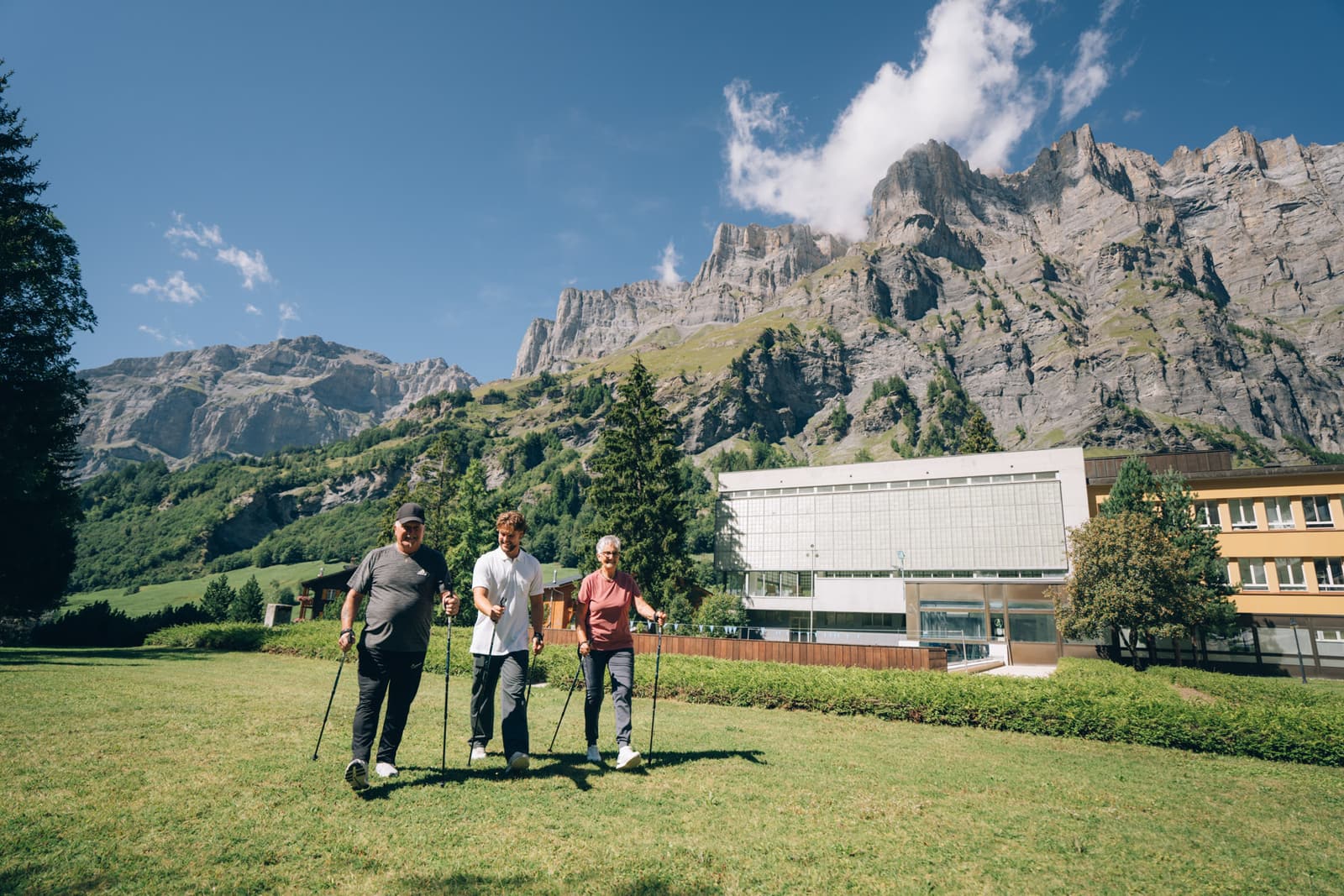
Nordic walking
Nordic walking is a sport that originated in Finland. It is practised with poles specially designed for walking, with the aim of also working the upper body.
This cardiovascular workout aims to improve endurance, strength, mobility and coordination by engaging the whole body. The poles help relieve pressure on the hips, knees and ankles while working the muscles of the trunk and arms. This makes it a very well-rounded sport that can be practised at any age, regardless of starting fitness level.